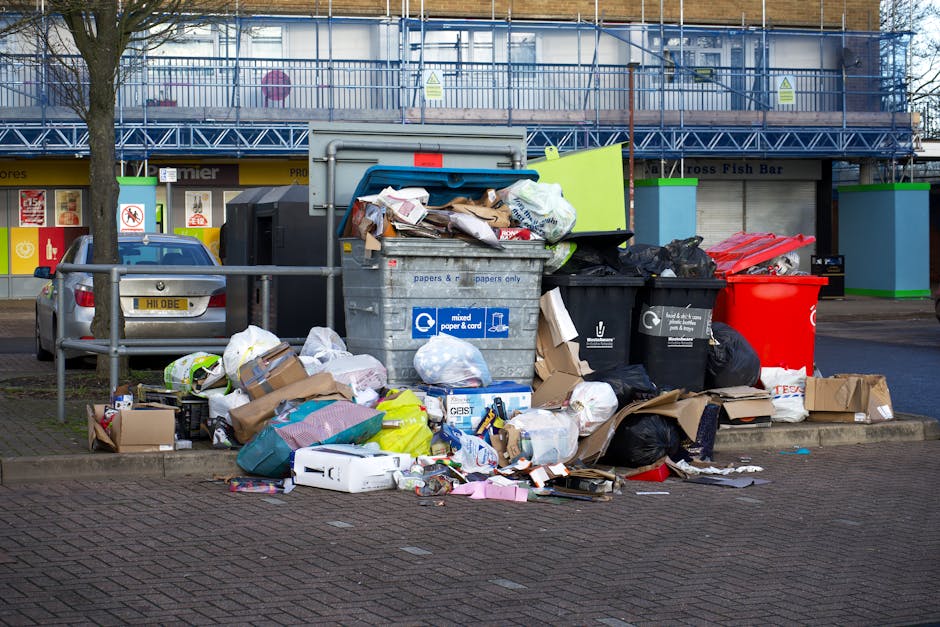
Avoid hidden charges for Shadwell bulky rubbish collection
If you are arranging bulky rubbish collection in Shadwell, the last thing you want is a cheerful quote that quietly grows teeth. A sofa turns into a "special item fee", a few extra bags become an "access surcharge", and suddenly the job costs far more than you planned. It happens. More often than it should, to be fair.
This guide explains how to avoid hidden charges for Shadwell bulky rubbish collection in plain English. You will learn what to ask before booking, which costs are usually included, where surprise fees tend to appear, and how to compare services without getting caught out. It also covers nearby options such as rubbish removal, man and van, and skip hire, so you can choose the right method for the job rather than the cheapest-sounding headline.
Let's face it: bulky waste is often awkward, heavy, and time-sensitive. The best way to keep costs under control is not to hunt for the lowest number on the page. It is to understand what that number actually includes.
Table of Contents
- Why Avoid hidden charges for Shadwell bulky rubbish collection Matters
- How Avoid hidden charges for Shadwell bulky rubbish collection Works
- Key Benefits and Practical Advantages
- Who This Is For and When It Makes Sense
- Step-by-Step Guidance
- Expert Tips for Better Results
- Common Mistakes to Avoid
- Tools, Resources and Recommendations
- Law, Compliance, Standards, or Best Practice
- Options, Methods, or Comparison Table
- Case Study or Real-World Example
- Practical Checklist
- Conclusion
- Frequently Asked Questions
Why Avoid hidden charges for Shadwell bulky rubbish collection Matters
Hidden charges are not just annoying. They can change the whole decision-making process. A quote that looks affordable at first glance may become poor value once you add waiting time, stair carry fees, congestion-related costs, disposal surcharges, or extra labour. And if you are trying to clear a flat, office, or garden on a deadline, you may not have the luxury of starting the search again.
In Shadwell, where access can vary from one street to the next, pricing clarity matters even more. Narrow roads, controlled parking, shared entrances, and upper-floor properties can all affect how bulky waste is collected. If those conditions are not discussed in advance, you can end up paying for the inconvenience twice: once in time and again on the invoice.
There is also the simple trust factor. Transparent pricing gives you confidence to book online or by phone without wondering what got left out. If a company can explain its costs clearly, it is usually a good sign that the rest of the process will be straightforward too.
Expert summary: The safest way to avoid surprise fees is to compare like with like. Ask what is included, what changes the price, how access is assessed, and whether disposal, labour, and loading are all covered in the quote.
If your job is larger or mixed with other waste, it can help to review related options such as house clearance, garage and loft clearance, or office clearance. These services may be more cost-effective than booking a simple bulky collection when the waste is not just one or two items.
How Avoid hidden charges for Shadwell bulky rubbish collection Works
The basic process is usually simple: you describe the waste, the provider estimates the load, agrees a price, and then collects and disposes of it. The tricky part is that not all bulky rubbish is equal. A mattress, a two-seater sofa, and a dismantled wardrobe may all need different handling. And yes, sometimes the "one sofa" job turns out to be three pieces of furniture, two broken drawers, and a bag of mystery screws. You know how it goes.
To avoid hidden charges, the quote process should cover five things:
- Volume or weight of the bulky waste
- Item type, especially if it includes appliances or awkward furniture
- Access conditions, such as stairs, restricted parking, or long carry distances
- Labour needs, including how many people are required to move the items safely
- Disposal rules, particularly for items that need special handling or recycling
Some services offer a fixed-price collection, while others charge by load, item, or time spent on site. Fixed pricing can be reassuring, but only if the inclusions are spelled out properly. A low headline quote with lots of exclusions is not really fixed at all. It is just waiting for a moment to grow.
For bulky waste that includes heavier or larger objects, the collection method matters too. A company may recommend grab lorry hire for larger mixed loads, or wait and load skip hire if access is tight and you want the waste removed quickly without keeping a container on the street. If you need same-day clearance, same day skip hire can sometimes solve the problem faster, though it is worth checking what the total cost includes.
Key Benefits and Practical Advantages
Getting pricing right is not only about avoiding inconvenience. It also makes the whole project smoother. When you know the real cost, you can plan the rest of the clear-out with much less stress.
Clear budgeting. You can compare collection options properly and avoid overspending on a simple job.
Faster decisions. Transparent quotes reduce back-and-forth. That is especially useful if you are clearing a property before a move, refurb, or tenancy handover.
Better service matching. If the job is mostly bulky furniture, a targeted collection may be better than a full skip. If it is mixed builders' waste, you may need something else again. Matching the service to the waste prevents wasteful spending.
Fewer disputes. When everyone agrees what was included before the job starts, there is less room for awkward surprises later. Nobody enjoys the "oh, just one more thing" conversation at the kerb.
Safer handling. The right method reduces the chance of damage, lifting injuries, or blocked access. That matters in homes, stairwells, and business premises alike.
One practical advantage people often miss: transparent pricing makes it easier to decide between bulk collection and skip-based disposal. If you want to compare both, take a look at skip sizes and prices and the guidance on what can go in a skip. That comparison alone can save you money before anything is lifted.
Who This Is For and When It Makes Sense
This kind of service is useful for a wide range of people, and not only when the council collection has fallen short.
- Homeowners clearing old furniture, broken appliances, or general clutter
- Landlords dealing with leftover items after a tenancy or move-out
- Tenants who need to clear bulky items without overspending
- Businesses removing office furniture, archived items, or damaged equipment
- Builders and contractors who need a clean site and predictable costs
It also makes sense when access is difficult. If the property is in a busy part of Shadwell, or the bulky waste is upstairs, a bespoke collection may be more practical than a standard skip. For example, a small flat clear-out with a sofa, bed frame, and table may be better handled by a collection crew than by estimating skip capacity and hoping for the best.
For mixed household clearances, the broader services on domestic skip hire and house clearance can also help you see whether you are dealing with a simple bulky collection or a more complete property clearance. Sometimes the real saving comes from choosing the right category in the first place.
Step-by-Step Guidance
If you want to avoid hidden charges, follow a simple process before you agree to anything.
- List every item. Write down what needs collecting, including large items, broken parts, and anything heavy.
- Take photos. Photos help the provider judge size, quantity, and access more accurately. A quick phone picture at the doorway often says more than a long description.
- Check access. Note stairs, narrow hallways, parking distance, lift access, and any permit or loading restrictions.
- Ask for the full price. Request a clear explanation of labour, disposal, loading, call-out, and any item-specific charges.
- Confirm excluded items. Ask whether fridges, mattresses, sofas, or mixed electrical items cost extra. Do not assume they are included.
- Request the collection method. Find out whether the team will load everything, whether you need to help, and how long the visit should take.
- Read the terms. Check cancellation rules, waiting charges, minimum call-out fees, and payment timing before booking.
- Book only when the quote is clear. If anything feels vague, ask again. A good provider will not mind explaining it twice.
If the waste is too bulky for a simple collection but not ideal for a skip, the middle-ground options can be worth exploring. man and van is often useful for quicker lift-and-load jobs, while rubbish removal may suit a mixed load that includes more than just large items. The point is not to choose the service with the flashiest name. It is to choose the one that fits the actual job.
Expert Tips for Better Results
Here are a few practical habits that keep costs sensible and the whole process calmer.
Be precise about volume
"A bit of furniture" sounds harmless, but it is not helpful for pricing. A bed base, mattress, wardrobe, and two armchairs are very different from one broken chair and a coffee table. The more specific you are, the less room there is for price changes later.
Sort items before the team arrives
If you can place bulky items in one area, you may reduce loading time. That does not mean doing the heavy lifting yourself, just making the crew's job simpler. Even a clear hallway helps more than people realise.
Check for awkward extras
Things like mirrors, old appliances, cabinet doors, and dismantled shelving can alter the quote if they were not mentioned. Add them up in advance. It is a small task, but it can save a lot of back-and-forth.
Ask about recycling and disposal routes
Not every bulky item ends up in the same place. Responsible disposal often involves sorting, recycling, and separate treatment for certain materials. If sustainability matters to you, the provider's recycling and sustainability information is worth reading. It will not magically lower every price, but it can help you understand what the service is doing with the waste after collection.
Choose the right urgency level
If you are not racing the clock, you may find more flexible pricing by booking ahead rather than asking for immediate collection. If you do need speed, a same-day option can still be fine - just make sure the urgency is reflected clearly in the quote.
One small but useful habit: keep the quote and the final job description in the same email thread or message chain. It sounds basic. It is basic. And it saves headaches later.
Common Mistakes to Avoid
Most hidden charges come from a handful of predictable mistakes. Once you know them, they are fairly easy to avoid.
- Assuming "all in" means everything. It often does not. Ask what exactly is included.
- Forgetting about access issues. Long carry distances, basement flats, and no-parking streets can change the cost.
- Mixing item types without telling the provider. Sofas, appliances, mattresses, and ordinary furniture may be priced differently.
- Ignoring weight or loading limits. What looks small can still be heavy, and heavy waste changes handling costs.
- Not reading the terms. Cancellation, waiting, and disposal conditions are where surprise charges often hide.
- Choosing only by the headline price. A suspiciously low quote can end up being the most expensive one by the time the job is done.
Another common trap is choosing the wrong disposal method altogether. For example, if the load includes building rubble as well as furniture, then a specific service such as builders waste removal or builders skip hire may suit better than a general bulky collection. That is not a marketing point; it is just how the costs and handling usually work out more cleanly.
Tools, Resources and Recommendations
You do not need special software to avoid hidden charges, but a few practical tools help a lot.
- Your phone camera for photos of each item and the access route
- A notes app for recording dimensions, floor level, and item count
- A tape measure for awkward furniture that might not fit through doors easily
- Old booking emails to compare any quoted extras against the final paperwork
- The provider's pricing pages to understand how size, access, and method affect cost
On this site, the most useful starting points are usually pricing and quotes, payment and security, and terms and conditions. Those pages help you see how pricing is presented, how payment is handled, and what conditions might apply if the job changes.
If the bulky rubbish is part of a larger project, it can also help to compare alternatives. construction waste disposal, site clearance, and demolition waste removal are all relevant when the job is bigger than a household clear-out. Choosing the wrong service is one of the most expensive mistakes people make, and it is often completely avoidable.
Law, Compliance, Standards, or Best Practice
Bulky rubbish collection is not just a matter of lifting and loading. Waste must be handled responsibly, and customers should expect the provider to follow proper waste transfer and disposal practices. In the UK, that generally means the waste should go to an appropriate licensed facility or disposal route, and it should not be handled in a way that creates avoidable safety or environmental risk.
For you as the customer, the main best-practice points are simple:
- Use a provider that is transparent about disposal and pricing
- Do not include prohibited or hazardous items unless they are specifically accepted
- Check whether specialist disposal is needed for appliances, chemicals, or confidential materials
- Keep records of your booking and any agreed exclusions or extra charges
If your bulky waste includes items like chemicals, paint, gas canisters, fridges, or anything potentially hazardous, the standard collection may not be suitable. In that case, a dedicated service such as hazardous waste disposal or fridge and appliance removal may be the safer route. For mattresses and sofas, it is also worth checking the specific handling rules through mattress and sofa disposal.
Best practice also means clarity on security and trust. If the job involves documents or sensitive items, confidential shredding may be more appropriate than a general collection. Different waste streams need different handling. Simple idea, but it matters.
Options, Methods, or Comparison Table
Not every bulky waste job should be solved the same way. Here is a practical comparison to help you decide.
| Method | Best for | Main advantage | Watch out for |
|---|---|---|---|
| Rubbish removal | Mixed bulky items, furniture, general household clutter | Simple, direct, often quick | Ask exactly what is included in the price |
| Man and van | Small-to-medium collections with limited access | Flexible and handy for awkward locations | Check labour time, waiting time, and load size limits |
| Skip hire | Ongoing clear-outs, larger mixed waste, jobs over several days | Lets you load at your own pace | Permits, space, and overfilling issues can add cost |
| Wait and load | Quick waste removal where a skip cannot be left on site | Useful for tight streets and restricted parking | Time pressure can affect how much can be loaded safely |
| Grab lorry hire | Heavier or bulkier mixed waste from properties or sites | Efficient for larger loads | Needs access and clear positioning on arrival |
There is no "best" option in the abstract. There is only the best option for your waste, your access, and your timeline. That is the bit people often skip, then regret later.
Case Study or Real-World Example
A typical Shadwell scenario goes like this. Someone is clearing a two-bedroom flat after a move. They have a sofa, bed frame, mattress, coffee table, dining chairs, and a couple of broken storage units. At first they ask for a cheap bulky collection. The first quote looks fine. Then the company asks whether the flat is on the third floor, whether parking is available nearby, and whether the sofa needs to be split to get out of the building.
That is the moment hidden costs often creep in. But if the customer had shared the access details up front, the quote would have reflected the actual job from the start. No drama. No surprise fees. Just a clear price, a booked slot, and a cleared flat by early afternoon.
In another common case, a small business in the area is replacing office furniture and has old desks, filing cabinets, and a damaged copier. A general bulky collection may still work, but if the job also includes archived paperwork, a separate plan with office clearance and confidential shredding can be cleaner and safer. That is exactly the kind of detail that keeps prices predictable.
The pattern is clear: the more accurately you describe the waste, the more reliable the quote becomes. It sounds almost too simple. But that is usually where the savings are.
Practical Checklist
Use this checklist before confirming your booking.
- Have I listed every bulky item that needs collecting?
- Have I shared photos and any rough dimensions?
- Have I explained access issues, stairs, parking, and floor level?
- Have I asked whether labour, loading, and disposal are included?
- Have I checked for extra charges on sofas, mattresses, fridges, or appliances?
- Have I confirmed whether the quote is fixed or estimated?
- Have I read the cancellation and waiting-time terms?
- Have I considered whether a skip, van, or grab service is a better fit?
- Have I checked the provider's payment and security information?
- Have I asked what happens if the load changes on the day?
If you can tick most of those off, you are in a much stronger position. Honestly, that one sheet of questions can save a surprising amount of hassle.
Get a free quote today and see how much you can save.
Conclusion
To avoid hidden charges for Shadwell bulky rubbish collection, focus on clarity rather than speed. The right quote should tell you what is included, what might cost extra, how access affects the price, and which collection method fits your waste best. Once you know that, you can compare services properly and book with confidence.
Whether you need a single-item pickup, a flat clearance, or something larger and messier, the principles stay the same: be specific, ask direct questions, and read the terms before you agree. That is how you keep the budget tidy and the job simple.
And if the pile still feels a bit daunting, that is normal. Start with the facts, take a breath, and get a quote that tells the full story. The rest tends to fall into place.
Frequently Asked Questions
What counts as bulky rubbish collection in Shadwell?
It usually means large household or commercial items such as sofas, beds, wardrobes, tables, white goods, and similar awkward items that are too big for regular bins. Exact acceptance can vary by provider, so it is always worth checking item by item.
How do I avoid surprise charges on a bulky waste quote?
Give the provider a full list of items, photos if possible, and clear access details. Then ask what is included in the price and whether anything could trigger an extra fee, such as stairs, long carries, or special disposal requirements.
Are mattresses and sofas usually extra?
They can be. Some providers include them in a standard price, while others add a handling or disposal charge. It depends on the collection method and the type of item, so you should ask before booking.
Is a fixed-price collection always better?
Not always. A fixed price is helpful if the inclusions are clear. If the quote is vague, a fixed number can still hide extras. The real question is whether the quote is detailed, not just whether it sounds reassuring.
What information should I send before getting a quote?
Send the item list, approximate size, location of the waste, access details, and whether anything is especially heavy or awkward. A photo is often the quickest way to avoid misunderstandings.
Can bulky rubbish collection be cheaper than skip hire?
Sometimes yes, especially for smaller loads or one-off item removal. For bigger clear-outs, a skip may be better value. Comparing the job against skip sizes and prices can help you decide.
What if I need the waste gone the same day?
Same-day removal is often possible, but it may cost more because of urgency and scheduling. Make sure the price you are given includes the rapid turnaround, not just the collection itself.
Do I need a permit for bulky rubbish collection?
Usually not for a direct collection, because no container is left on the highway. If you choose skip hire and the skip has to be placed on a public road, you may need a permit. In that case, skip hire permits and skip permits are worth checking.
What should I do with broken appliances or fridges?
These should be handled carefully because they may require a specialist route. A service like fridge and appliance removal is often more suitable than a standard bulky collection.
How can I tell if a quote is too cheap to trust?
If the quote is much lower than the others and does not explain disposal, labour, access, or item restrictions, be cautious. Very low prices often rely on extras being added later. Ask for a detailed breakdown before you commit.
What is the best option for mixed bulky waste and general rubbish?
It depends on volume and access. For some jobs, man and van or rubbish removal will be the most straightforward choice. For larger mixed loads, a skip or grab service may be better.
Where can I check the company's policies before booking?
You can review the relevant information on pages such as complaints procedure, payment and security, and terms and conditions. It is a small step that can prevent bigger problems later.